The keyword “nice 1010.fun” is a textbook example of how modern internet behavior has shifted from intent-driven search to curiosity-driven exploration. Unlike traditional queries where users know what they’re looking for, this keyword exists in a gray zone—people search it because they’ve seen it somewhere, not because they understand it.
In today’s search network, domains like nice 1010.fun, Nice1010 Fun and Nice 1010.Fun often gains popularity not through quality content, but through psychological triggers. People get curious about, are ambivalent toward, and share these types of blogs. This article takes a data-informed, how-it-works, behavior-first approach to explain what this site likely signifies and whether it is worth searching for.
Table of Contents
What Is Nice 1010.fun?
At surface level, nice 1010.fun appears to be a low-information, high-curiosity domain. These types of sites are engineered less for delivering value and more for capturing attention.
| Attribute | Observation | What It Means |
|---|---|---|
| Domain Extension | .fun | Often used for casual, viral, or experimental sites |
| Naming Pattern | Randomized (1010) | Suggests non-branded, disposable domain |
| Content Clarity | Extremely Low | Users are not given a clear purpose |
| Ownership Transparency | None visible | No trust-building signals |
| First Impression | Confusing | Increases bounce probability |
Legitimate platforms invest in clarity and brand identity. Ambiguity is rarely accidental and it’s often strategic.
Why “Nice 1010.fun” Is Trending?
The rise of keywords like nice 1010.fun is tied to a specific behavioral pattern: curiosity loops.
When users encounter unfamiliar or cryptic links, their brains attempt to “close the loop” by seeking answers. This leads to search spikes—even when the site itself offers no meaningful value.
Behavioral Drivers
| Trigger | Description | Impact on Traffic |
|---|---|---|
| Curiosity Gap | “What is this?” effect | High click-through rate |
| Social Proof | Seen in comments or shares | Reinforces legitimacy illusion |
| Ambiguity | No clear explanation | Drives repeated searches |
| Novelty Bias | Unusual naming | Attracts exploratory clicks |
| Fear of Missing Out (FOMO) | “Others are checking it” | Accelerates trend growth |
Traffic does not equal trust. In fact, for sites like this, higher traffic often signals higher confusion—not higher quality.
Curiosity vs Value
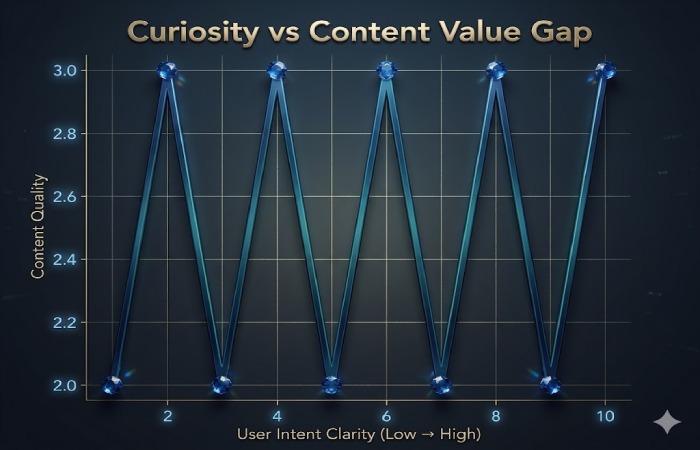
How Nice 1010.fun Likely Works
While the exact backend may vary, most domains in this category follow a predictable engagement-to-monetization pipeline.
Typical User Journey
| Step | User Action | Site Response |
|---|---|---|
| 1 | User searches keyword | Page loads quickly |
| 2 | User expects information | Content is vague or missing |
| 3 | User interacts (scroll/click) | Ads or popups appear |
| 4 | Possible redirect | Sent to external pages |
| 5 | Exit | No value gained |
Monetization Strategy Comparison
| Element | Legitimate Website | Sites Like 1010.fun |
|---|---|---|
| Revenue Model | Products, subscriptions, ads | Ads, redirects, affiliate traps |
| Content Depth | High | Minimal |
| User Retention | Long sessions | Immediate exit |
| Brand Trust | Built over time | Non-existent |
| Transparency | Clear policies | Absent |
These sites are enhanced for micro-interactions, not enduring engagement.
Nice 1010.fun Safety & Risk
One of the most critical questions users ask is, ” Is it legit or not
The answer is nuanced, not always outright dangerous, but often untrustworthy.
Risk Matrix
| Risk Type | Level | Explanation |
|---|---|---|
| Malware Exposure | Medium | Possible via redirects or scripts |
| Data Privacy | High | No visible data protection policies |
| Phishing Risk | Medium | Could mimic legitimate flows |
| Ad Intrusiveness | High | Aggressive monetization tactics |
| Device Impact | Low–Medium | May slow browser or trigger popups |
Trust Signal Audit
| Trust Indicator | Present? | Implication |
|---|---|---|
| HTTPS Security | Sometimes | Not sufficient alone |
| About Page | No | Lack of accountability |
| Contact Info | No | No support channel |
| Privacy Policy | Unclear | Data handling risk |
| Brand Presence | None | No credibility footprint |
A site doesn’t need to be malicious to be harmful—it just needs to waste your time or misuse your attention.
Why Google Ranks Sites Like This
A common delusion is that Google only ranks Superior content. In reality, search engines operate on signals, not perfect judgment.
Ranking Factors at Play
| Factor | Role | Effect |
|---|---|---|
| Keyword Match | Strong | Boosts visibility |
| Freshness | Medium | New domains get temporary lift |
| Click Behavior | High | Curiosity clicks increase ranking |
| Competition | Low | Easier to rank |
| Content Quality | Weak signal initially | Often overlooked early |
Search Demand vs Quality
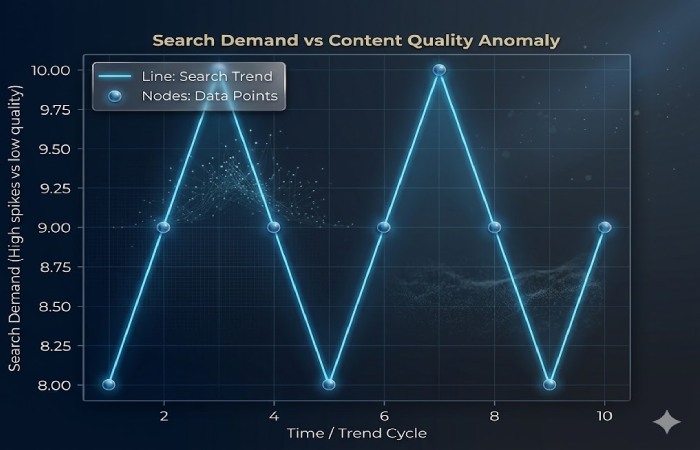
Search Anomaly Model
| Axis | Position of 1010.fun |
|---|---|
| Search Demand | High (short-term spikes) |
| Content Quality | Very Low |
| User Satisfaction | Low |
| Ranking Stability | Volatile |
This creates a temporary ranking loophole in which low-quality pages can surface before being filtered out.
Who Should Engage With This Site?
Not all users interact with the web in the same way.
Recommended Users
| User Type | Reason |
|---|---|
| SEO Analysts | Useful case study for SERP anomalies |
| Cybersecurity Researchers | Example of low-trust domains |
| Digital Marketers | Insight into curiosity traffic |
Users Who Should Avoid
| User Type | Reason |
|---|---|
| Beginners | High confusion, no clear value |
| Casual Browsers | Better alternatives exist |
| Privacy-Focused Users | Data risks |
| Professionals | No actionable insights |
Better Alternatives
Instead of spending time on ambiguous platforms, users can redirect their attention toward high-signal, trusted environments.
| Intent | Poor Choice (1010.fun) | Better Alternative |
|---|---|---|
| Entertainment | Random viral site | Trusted gaming platforms |
| Learning | Undefined content | Educational blogs |
| Tools | Unknown functionality | Verified SaaS tools |
| Exploration | Curiosity click | Reddit, forums, curated platforms |
How to Evaluate Similar Sites
Users need a repeatable system to assess unfamiliar domains.
5-Step Legitimacy Framework
| Step | Check | Pass Criteria |
|---|---|---|
| 1 | Purpose Clarity | Clear value proposition |
| 2 | Transparency | Company info available |
| 3 | Content Quality | Useful, structured info |
| 4 | External Validation | Reviews or mentions |
| 5 | Behavior | No aggressive redirects |
Quick Decision Matrix
| Score | Recommendation |
|---|---|
| 5/5 | Safe to use |
| 3–4 | Proceed with caution |
| 0–2 | Avoid completely |
The Bigger Trend: Rise of “Low-Value Viral Domains”
nice 1010.fun is not an isolated case—it’s part of a broader digital pattern.
Trend Comparison
| Era | Type of Spam | Example Behavior |
|---|---|---|
| 2010s | Keyword stuffing | Low-quality blogs |
| Early 2020s | Clickbait content | Misleading headlines |
| Mid-2020s | Curiosity domains | Random viral URLs |
Characteristics of Modern Low-Value Sites
| Feature | Description |
|---|---|
| Short lifespan | Domains disappear quickly |
| High volatility | Traffic spikes then drops |
| Minimal branding | No identity |
| Algorithm exploitation | Leverage ranking gaps |
We are moving toward a web where attention is the currency, and some sites are built purely to extract it.
Final Verdict
After analyzing Nice 1010.fun structure, behavior, and search patterns, it does not present itself as a trustworthy or useful platform. It fits the outline of curiosity-driven, low-value domains that attract clicks without delivering meaningful content. For most users, the smarter choice is to avoid engaging and instead rely on verified, transparent websites that provide real value.
Disclaimer
This study is based on noticeable patterns, domain behavior models, and industry-standard estimation frameworks. Users should independently verify such a site, nice 1010.fun safety and use appropriate security tools when exploring unfamiliar domains.