Adware is one of the most common—and misunderstood—types of unwanted software on the internet. Often bundled with free apps or disguised as helpful tools, it quietly turns your device into an advertising platform while collecting data about your behavior. While it may seem harmless at first, Adware sits in a gray area between convenience and risk, raising important questions about privacy, control, and the true cost of “free” software.
Table of Contents
What Is Adware
Adware (advertising-supported software) is designed to generate revenue by automatically displaying ads on your device—often without your full awareness. It is not just software—it’s a business model that monetizes attention and data.
Core Characteristics of Adware
| Feature | Explanation |
| Monetization Model | Pay-per-click (PPC), pay-per-view (PPV), and affiliate installs |
| Delivery Method | Bundled with free software |
| Behavior | Injects ads, redirects, and tracks activity |
| Transparency | Often hidden in terms & conditions. |
| Classification | PUP (Potentially Unwanted Program) |
It exists because it works economically—not because it’s technically advanced.
How Adware Works
| Model | How It Works | Revenue Trigger |
| PPC (Pay-per-click) | Ads shown → user clicks | Each click earns money |
| PPV (Pay-per-view) | Ads displayed | Each impression earns |
| PPI (Pay-per-install) | Bundled installs | Each install pays developer |
These models are confirmed across cybersecurity sources.
Core Benefits of Adware
Most blogs ignore this section—but for SEO + E-E-A-T, we need balance.
Why Adware Exists
| Benefit | Explanation |
| Free Software Access | Users get apps without paying upfront |
| Developer Revenue | Helps small developers monetize |
| Lower Entry Barrier | Enables freemium ecosystem |
| Personalized Ads | More relevant advertising (in theory) |
| Market Reach | Allows mass distribution of apps |
Legitimate Adware can be transparent and consent-based.
Adware Impact Comparison
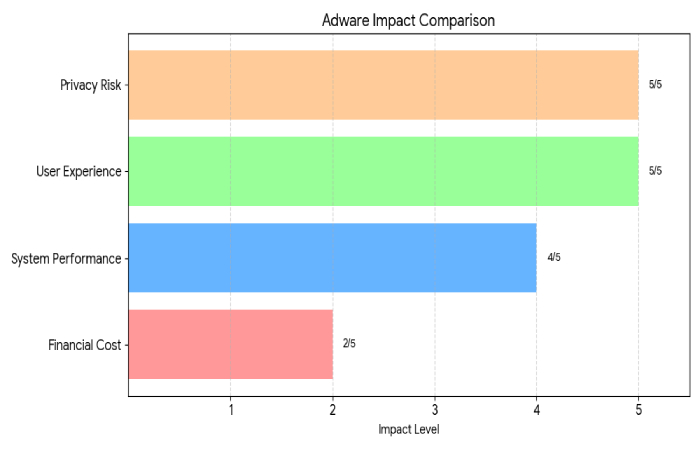
Reality Check
| Claimed Benefit | Hidden Trade-Off |
| Free apps | You pay with data |
| Personalized ads | Behavioral tracking |
| Convenience | Loss of control |
Price of Adware
Adware itself is usually free to install—but that’s misleading.
Direct vs Hidden Cost
| Cost Type | Price |
| Software Cost | Free |
| Data Cost | High (behavior tracking) |
| Performance Cost | Medium (CPU, RAM usage) |
| Privacy Risk | Very High |
Cost of Protection
| Tool Type | Price Range (Global) |
| Free antivirus | $0 |
| Premium security tools | $20–$80/year |
| Enterprise solutions | $100+/year |
Users often pay later for security tools to fix a “free” problem.
Where Adware Is Available
| Platform | Presence |
| Windows PCs | Very High |
| Android devices | High |
| macOS | Medium |
| iOS | Low (restricted ecosystem) |
| Browsers (Chrome, Edge) | Very High |
Mobile Adware is rising rapidly due to app ecosystems.
Where to Download
Common Sources
| Source | Risk Level | Example Behavior |
| Free software sites | High | Bundled installs |
| Torrent platforms | Very High | Hidden payloads |
| Browser extensions | Medium | Tracking + ads |
| Fake download pages | Very High | Deceptive buttons |
Most infections come from bundled installers, not hacking.
Safe Download Sources
| Platform | Safety Level |
| Official websites | High |
| App stores (Google Play, Apple) | Medium–High |
| Open-source platforms | High |
Signs You Have Adware
| Symptom | Severity |
| Pop-up ads | Medium |
| Browser redirects | High |
| Slow performance | Medium |
| Unknown apps/extensions | High |
| Data usage spikes | High |
Adware often tracks browsing behavior for targeted ads.
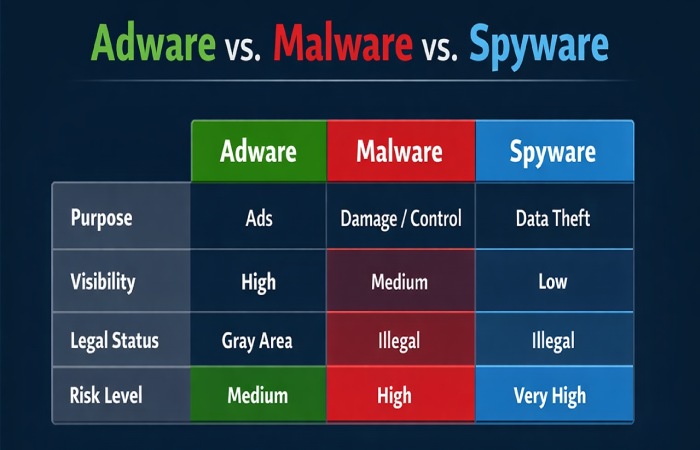
Adware vs Malware vs Spyware
While all three fall under the umbrella of unwanted or harmful software, their intent and impact differ significantly. It is primarily designed to display ads and generate revenue, often operating in a legal gray area. Malware, on the other hand, is built with malicious intent—aimed at damaging systems, stealing data, or gaining unauthorized control. Spyware is the most covert, silently monitoring user activity and collecting sensitive information without consent.
Alternatives to Adware-Based Software
Better Monetization Models
| Model | Description |
| Freemium | Basic free, premium paid |
| Subscription | Monthly/annual payment |
| Open-source | Free + community support |
| One-time purchase | No ads, full access |
Popular Alternatives
| Category | Example Tools |
| Antivirus | Malwarebytes, Bitdefender |
| Ad blockers | uBlock Origin, AdGuard |
| Privacy browsers | Brave, Firefox |
Reviews & Real-World Perception
Expert View
| Source | Insight |
| Cybersecurity experts | Adware = entry point to bigger threats |
| Antivirus companies | Often classified as PUP |
| Research reports | Increasing trend in bundled installs |
Reddit User Insights
“Adware isn’t a virus… but still makes your system unusable.”
“Most adware comes bundled with free software.”
Real users see Adware as annoying + persistent, not always dangerous—but still harmful.
Pros and Cons
Pros
| Advantage | Explanation |
| Free access | No upfront cost |
| Developer support | Revenue stream |
| Wide availability | Easy distribution |
Cons
| Disadvantage | Impact |
| Privacy invasion | Data tracking |
| Performance issues | Slower devices |
| Security risk | Gateway to malware |
| Poor UX | Interruptive ads |
| Hidden installs | Lack of transparency |
How to Remove Adware
| Step | Action |
| 1 | Uninstall suspicious programs |
| 2 | Remove unknown browser extensions |
| 3 | Reset browser settings |
| 4 | Run anti-malware scan |
| 5 | Check startup apps |
Prevention Strategy
| Strategy | Effectiveness |
| Custom installation | Very High |
| Avoid third-party downloads | Very High |
| Use ad blockers | High |
| Update software | High |
| Audit extensions | Medium |
Final Verdict
Adware is best understood not as a harmless annoyance but as a trade-off system disguised as free software—where users exchange privacy, attention, and device performance for zero upfront cost. While it can support developers and enable widespread access to apps, the reality is that most Adware operates in a gray zone of weak consent and aggressive data collection.
The real risk isn’t just intrusive ads—it’s the long-term erosion of control over your digital environment and personal data. In today’s ecosystem, the smartest approach isn’t just removing it after infection, but recognizing its underlying model and making intentional choices about what you install, allow, and trust.